Six programs. One curious journey.
From first smiles to kindergarten-ready, every Early Explorers classroom runs on hands-on STEM/STEAM discovery, scaled to exactly where your child is today. Find your child’s age below, then come see the room in person.
Infant Program
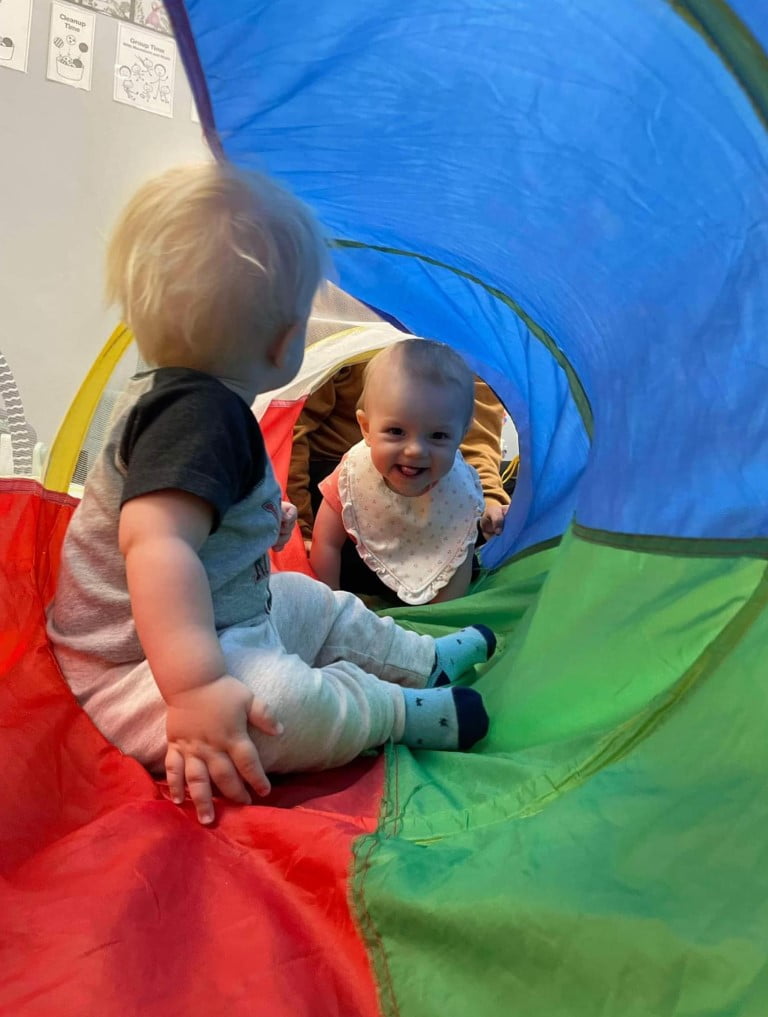
Our Growing Explorers infant room is built around one thing first: a safe, secure, loving relationship between your baby and their caregiver. From there, gentle STEM/STEAM experiences begin, with sensory play that introduces basic cause and effect.
What the program includes
- A safe and secure environment that helps foster loving relationships with the caregiver
- STEM/STEAM curriculum to provide early exposure and establish a strong foundation
- Sign language communication techniques to maximize level of understanding
- Daily activities designed to coincide with physical development
- Daily and weekly parental reports to keep you informed of your child’s development
What a day looks like
- Warm, unhurried greetings and individual feeding and nap rhythms
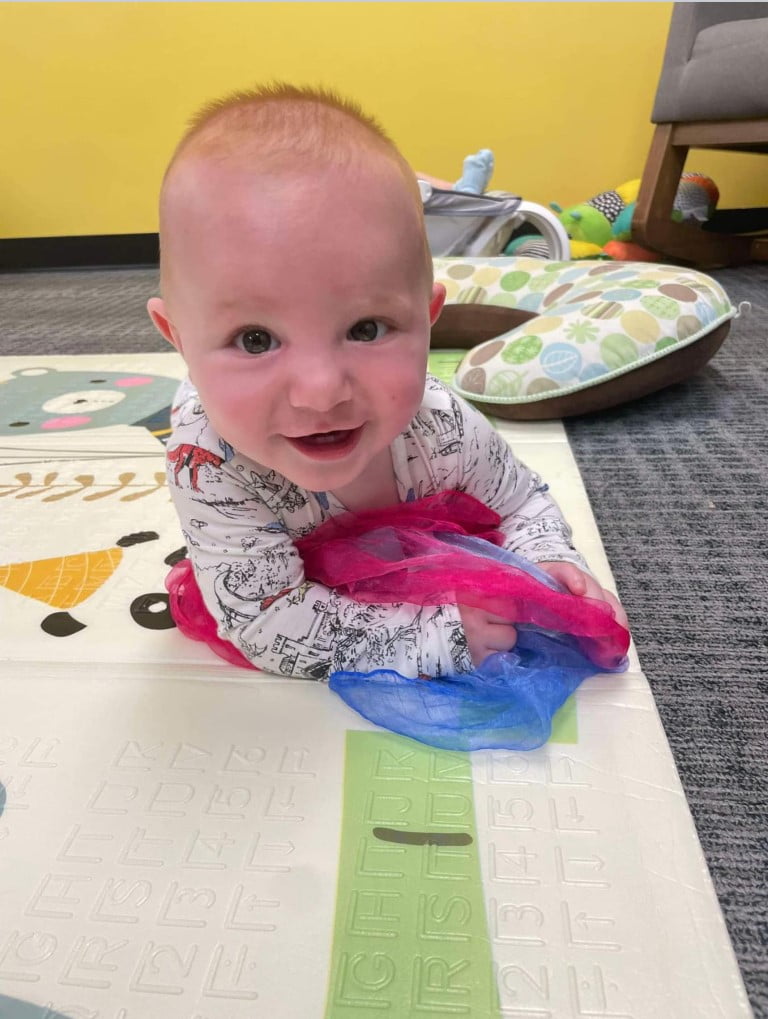
- Tummy time, mirror play and sensory scarves on the mat
- Simple baby sign language woven into songs and routines
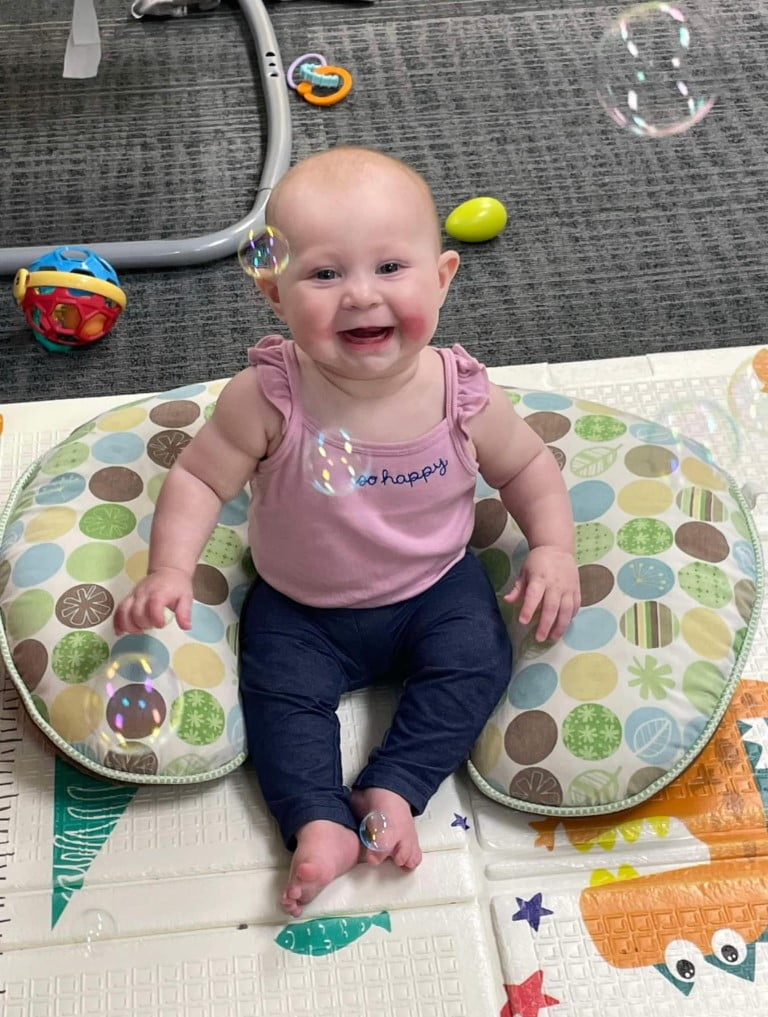
- Cause-and-effect play: bubbles, stacking, rolling, reaching
- A daily report home so you never miss a moment
Skills we build
Toddler Program
Our Discoverers Toddler Program knows that a toddler’s ability to understand the world around them is one of the strongest indicators of a young child’s later capacity to excel in critical educational areas such as reading, writing and science, and a significant early indicator of future mathematical abilities. Simple experiments and exploration foster that curiosity every day.
What the program includes
- A trust-centric environment that creates real relationships with the teachers
- STEM/STEAM curriculum to provide an invaluable framework for future critical learning capabilities
- Sign language communication techniques to maximize levels of understanding
- Daily exercises and activities designed to coincide with physical development
- Daily and weekly parental reports to keep you informed of your child’s development
What a day looks like
- Circle time with songs, signs and felt-board stories
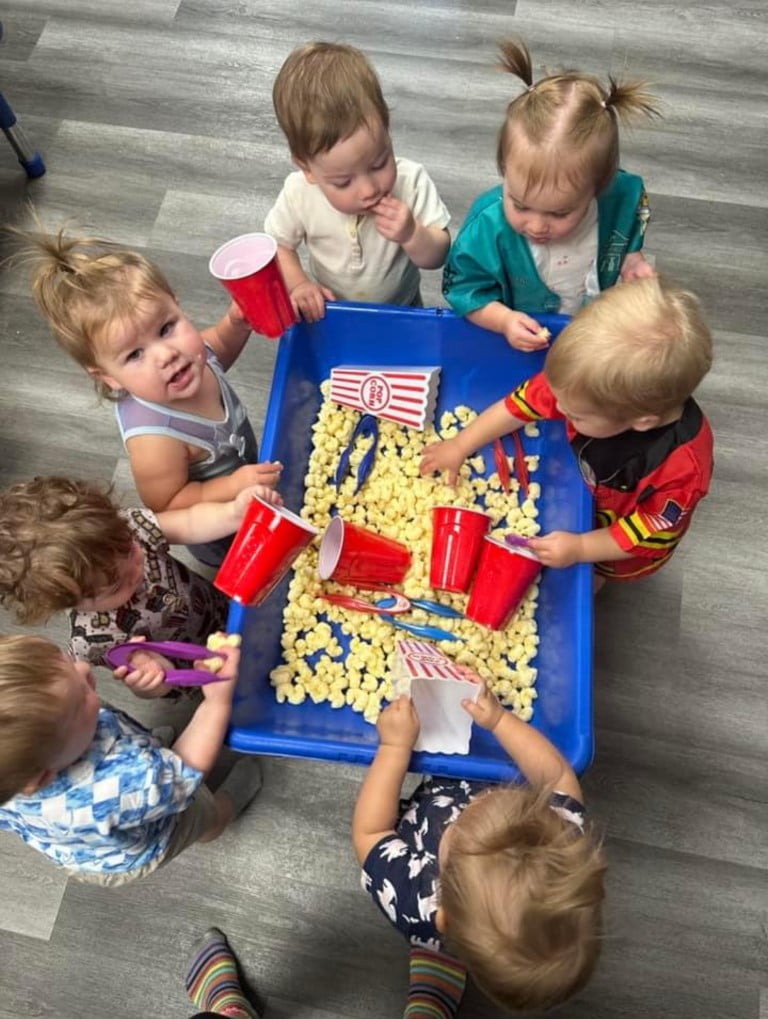
- Sensory bins: popcorn, oats, ice and farm-animal digs
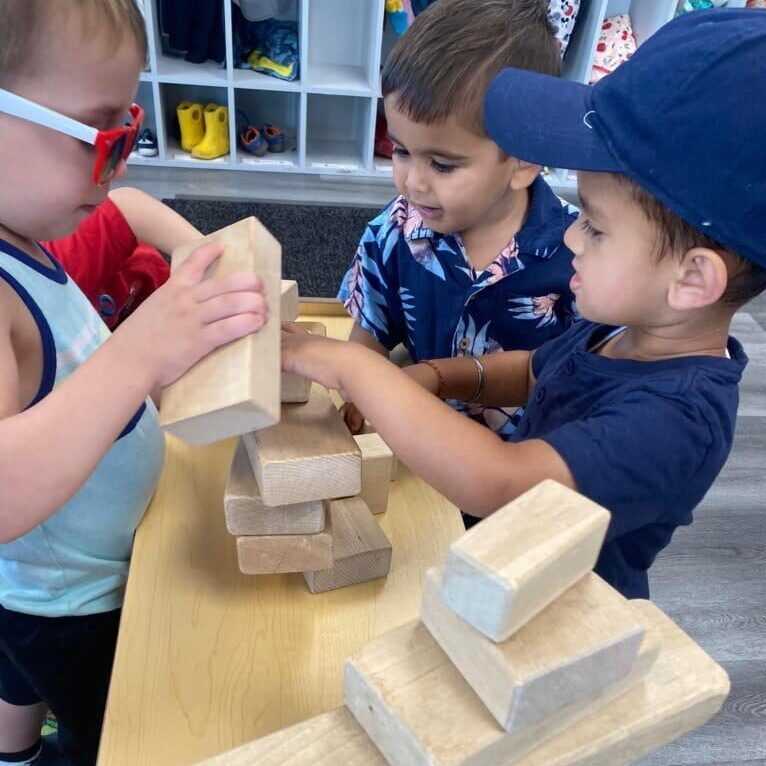
- Block building and stacking for early engineering
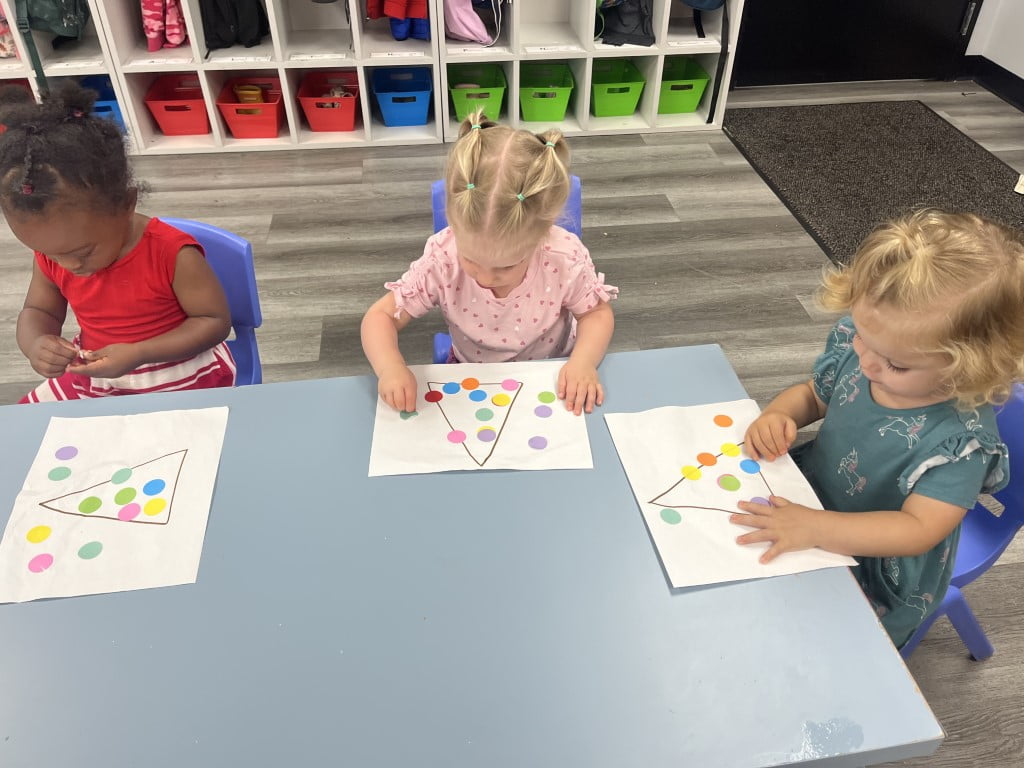
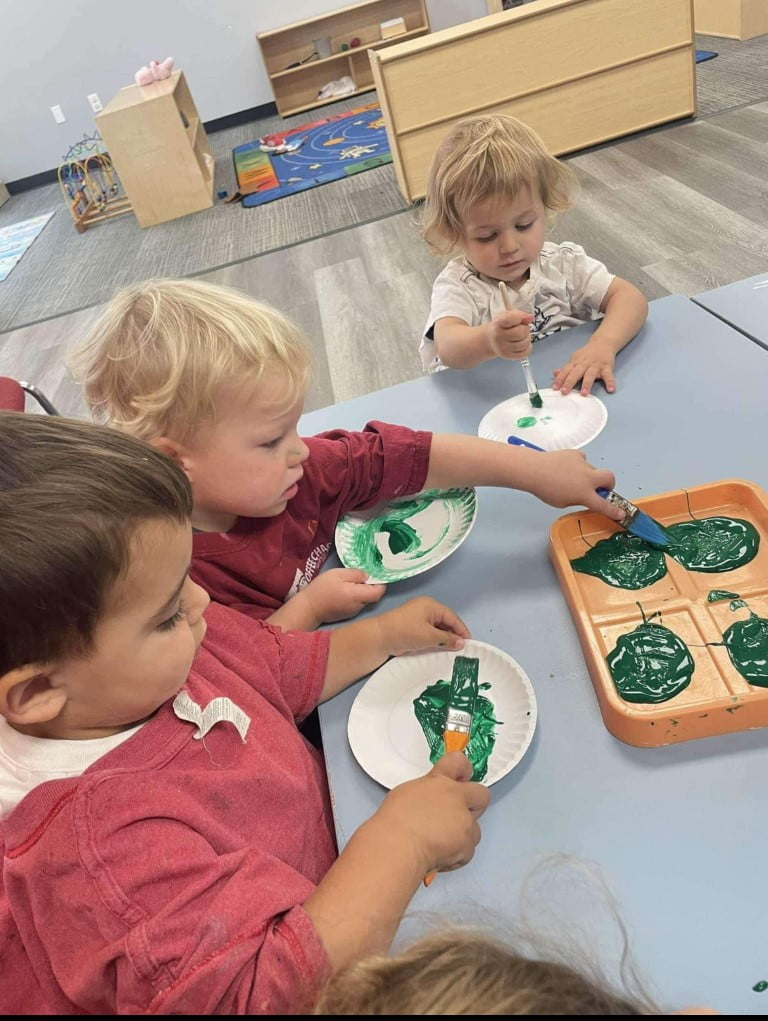
- Process art with brushes, stickers and paint
- Outdoor play and a daily report home
Skills we build
Two’s Program
A STEM classroom for 2-year-olds focuses on creating an environment where toddlers can engage in exploration, sensory play and hands-on discovery that introduce early concepts in science, technology, engineering and math. At this age, learning is driven by curiosity and play, so the classroom emphasizes safety, accessibility and simplicity while encouraging experimentation and problem-solving.
What the program includes
- Open, accessible learning space with designated zones for science, technology, engineering and math
- Hands-on materials: large soft blocks, stacking rings, sensory tables and magnetic toys
- Sensory and tactile learning with sensory bins, tactile walls and interactive textures
- Social and emotional learning through group play and teacher-guided problem-solving
- Outdoor exploration: nature walks, gardening and sensory exploration outside
What a day looks like
- Free exploration across the STEM zones
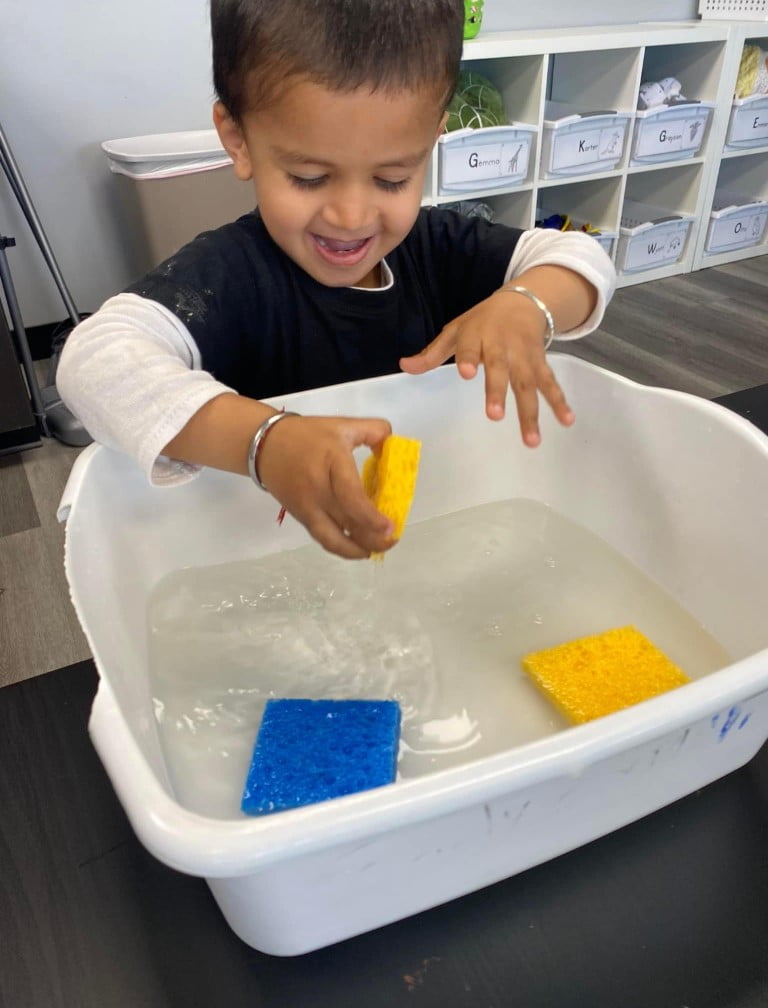
- Water table scooping, pouring and squeezing
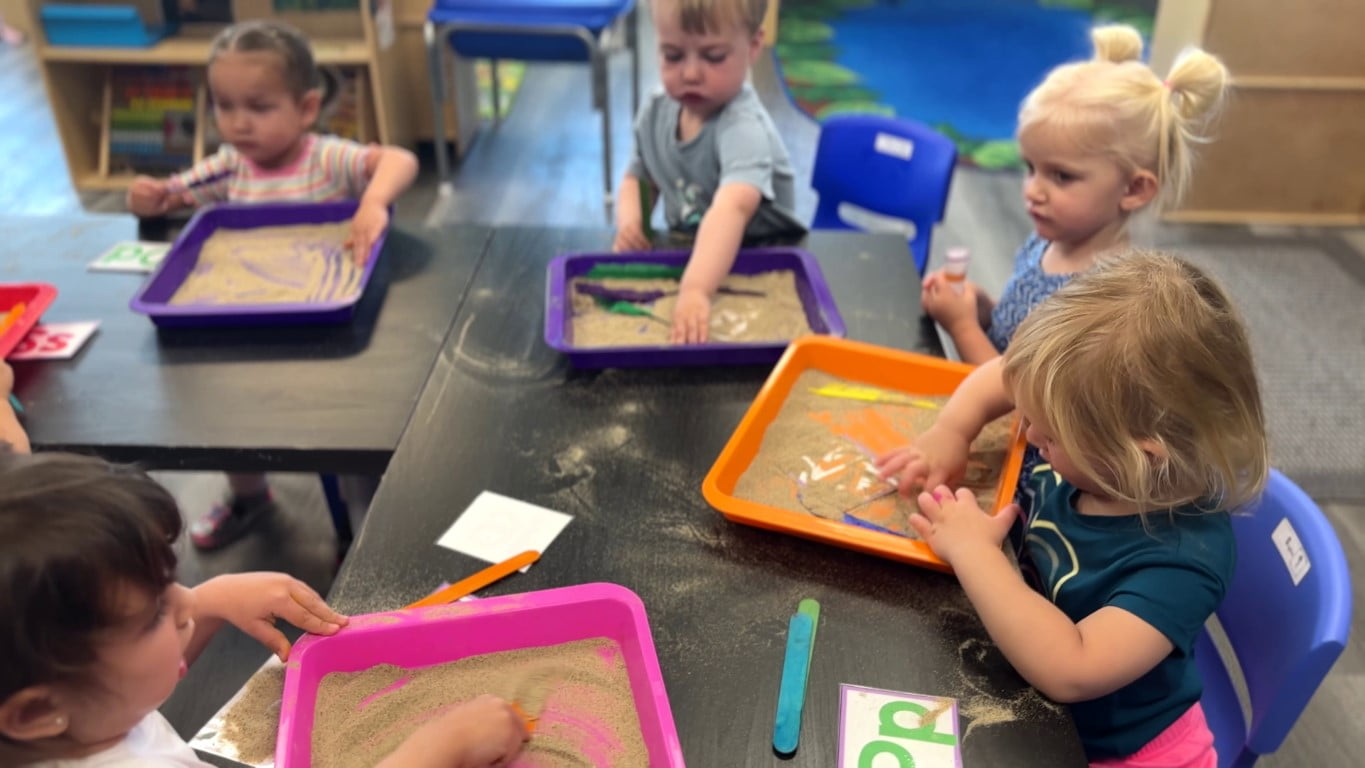
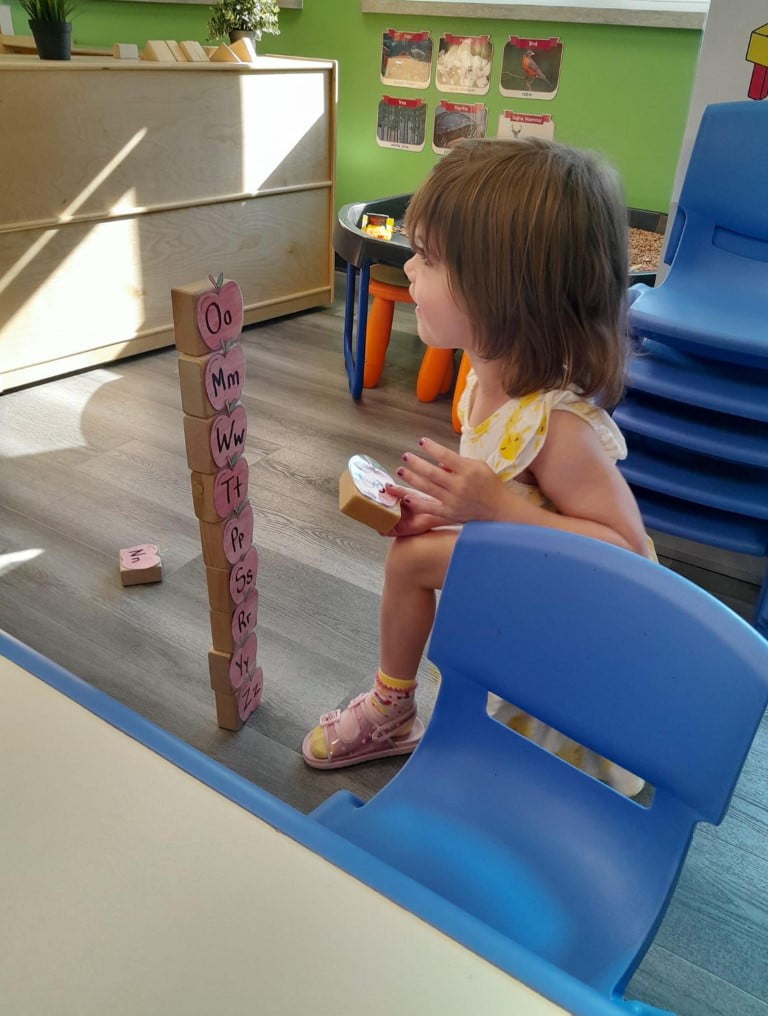
- Tracing letters and shapes in colorful sand trays
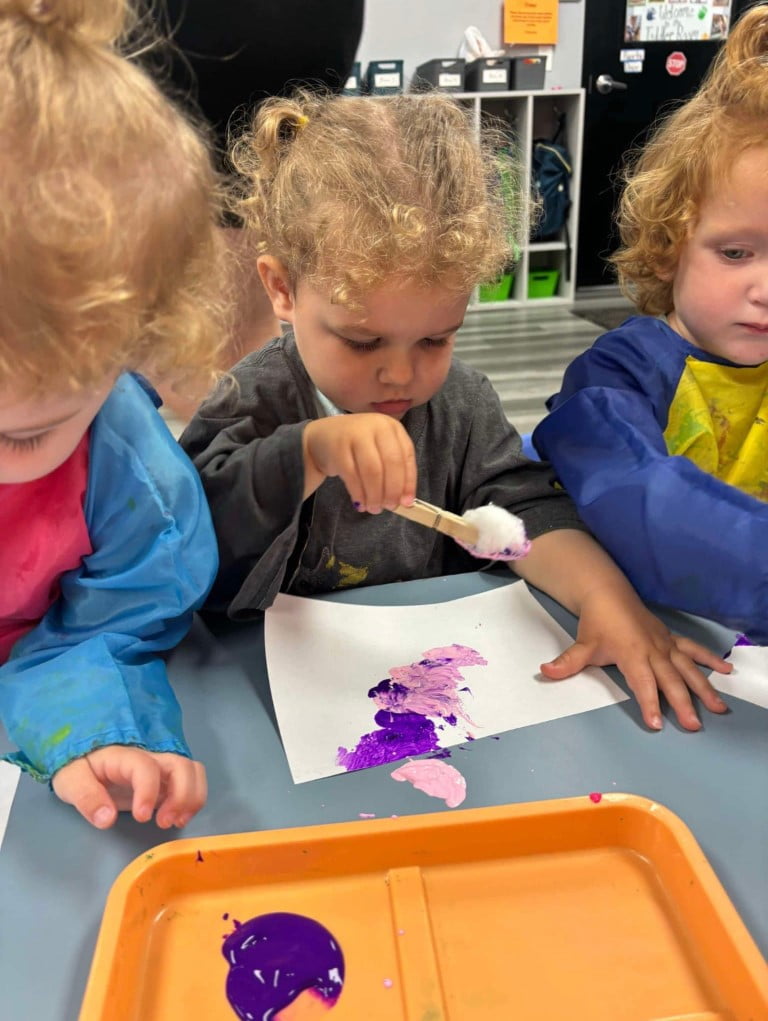
- Group art projects with paint, glue and sponges
- Nature walks and garden time
Skills we build
Young Preschool
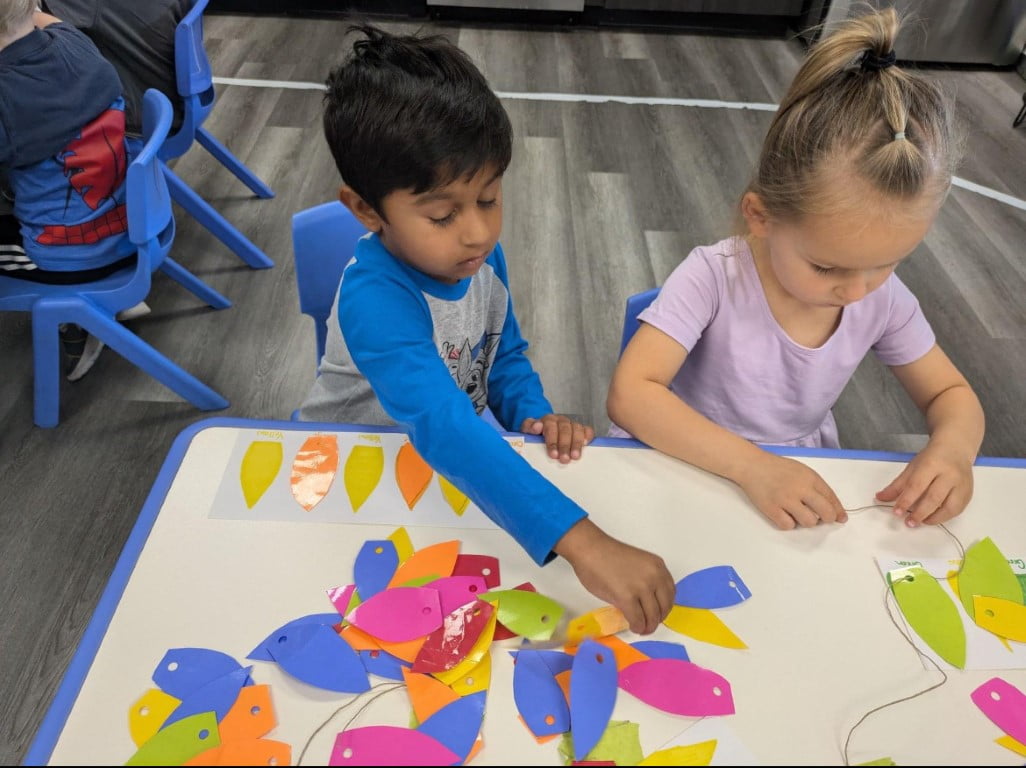
Our Young Preschool STEM classroom is designed for 2½ to 3-year-olds, a nurturing and stimulating environment where young children safely explore basic concepts in science, technology, engineering and math. The design prioritizes sensory experiences, hands-on exploration and open-ended play to develop early critical thinking and problem-solving. Art and science projects enhance creativity along the way.
What the program includes
- Open, flexible learning areas for building, science discovery and math, plus cozy spaces for reading
- Hands-on STEM materials: blocks, magnifying glasses, nature items, water and sand tables
- Sensory bins filled with rice, beans and other textures to build fine motor skills
- STEM art and literacy: STEM-themed books, crayons, paints and crafts
- Safe, accessible room with labeled storage at child height that fosters independence
- Outdoor STEM: gardens, sandboxes and weather observation
What a day looks like
- Morning choice time in building, science and math zones
- Magnifying-glass investigations of nature finds
- STEM storybook time in the cozy reading nook
- Art and science projects with paint, sponges and crafts
- Weather watching and garden time outdoors
Skills we build
Preschool Program
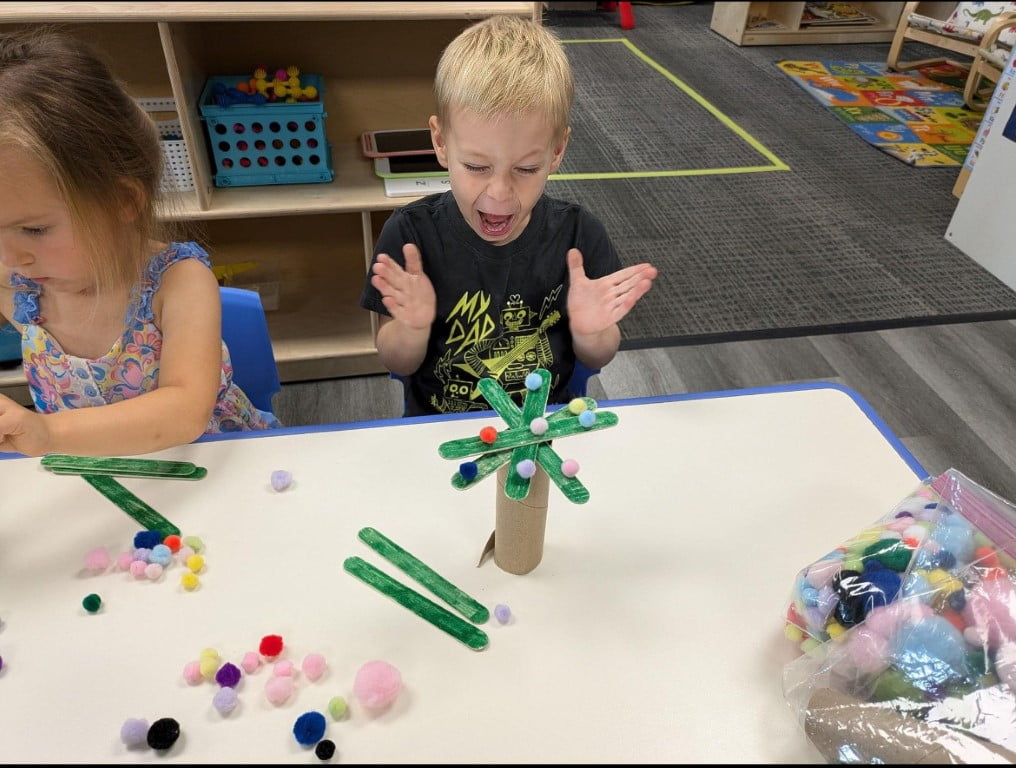
Our STEM/STEAM Explorers Preschool Program helps develop a preschooler’s confidence in themselves, in their own ability to learn, and in understanding the world around them. We don’t rely on academic achievement alone: we foster an environment that teaches social skills and understanding of one another, because school will soon ask for real teamwork. Research shows that understanding the world is an early predictor of later reading, science and math skills. We teach it daily, and we make sure your child loves the way they are learning it.
What the program includes
- A fostering environment that creates the confidence for each child to become independent
- STEM/STEAM curriculum that engages a young child’s natural curiosities and prepares them for future STEM learning
- Hands-on activities for visual and kinesthetic learners
- Daily outdoor play designed for exercise and large motor development
- Parent/teacher conferences with individual reports of your child’s progress
What a day looks like
- Morning meeting and group problem-solving
- Interactive technology and group STEM projects
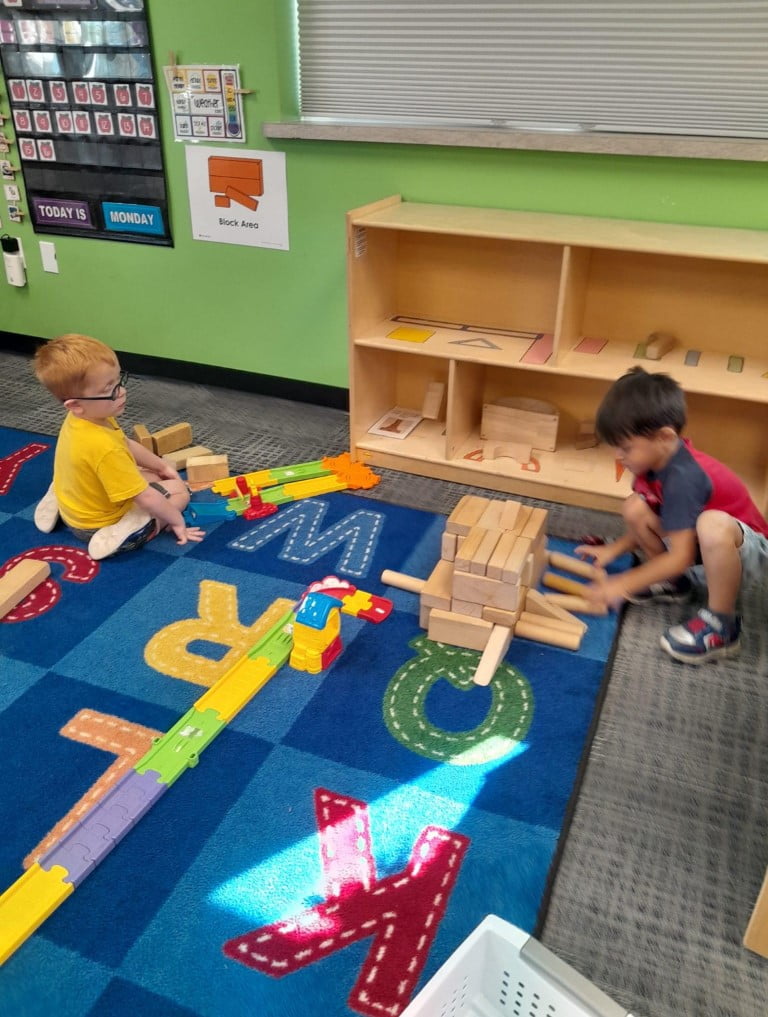
- Block-area engineering challenges with friends
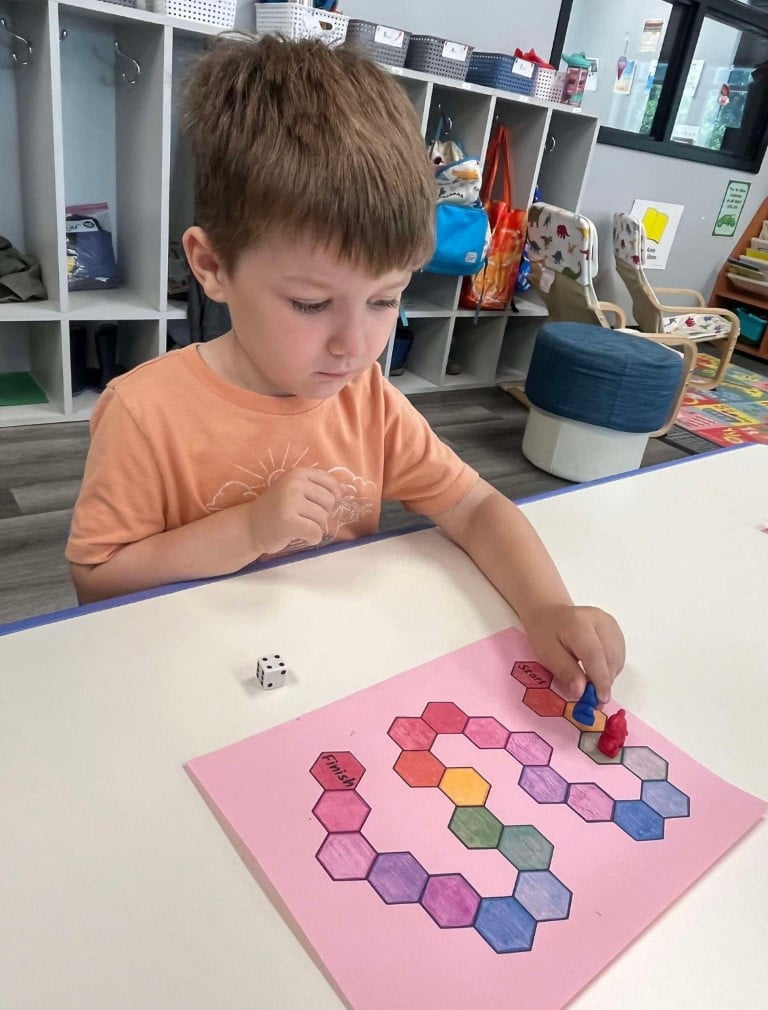
- Games with dice, colors and counting
- Daily outdoor play for big-muscle development
Skills we build
Pre-K Program
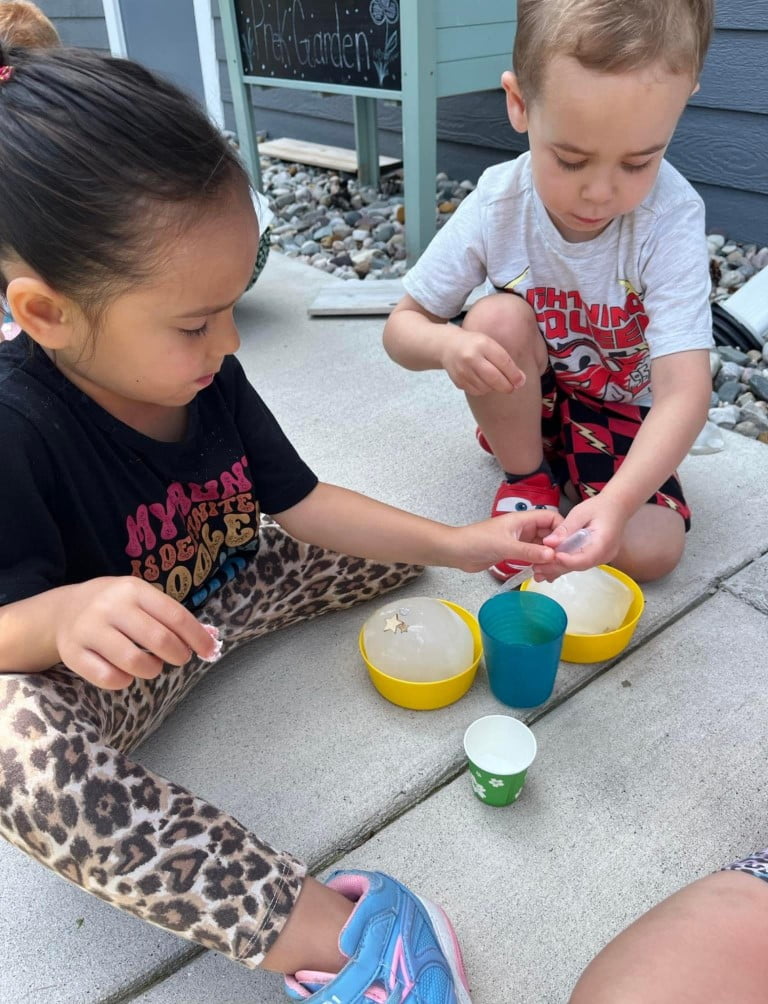
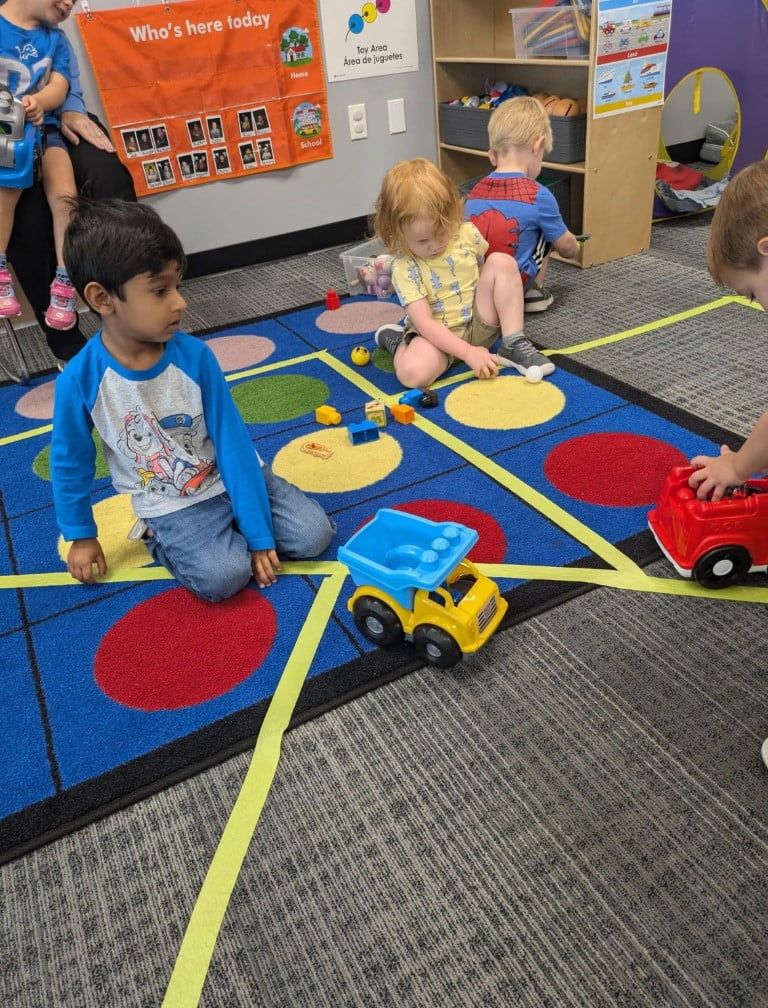
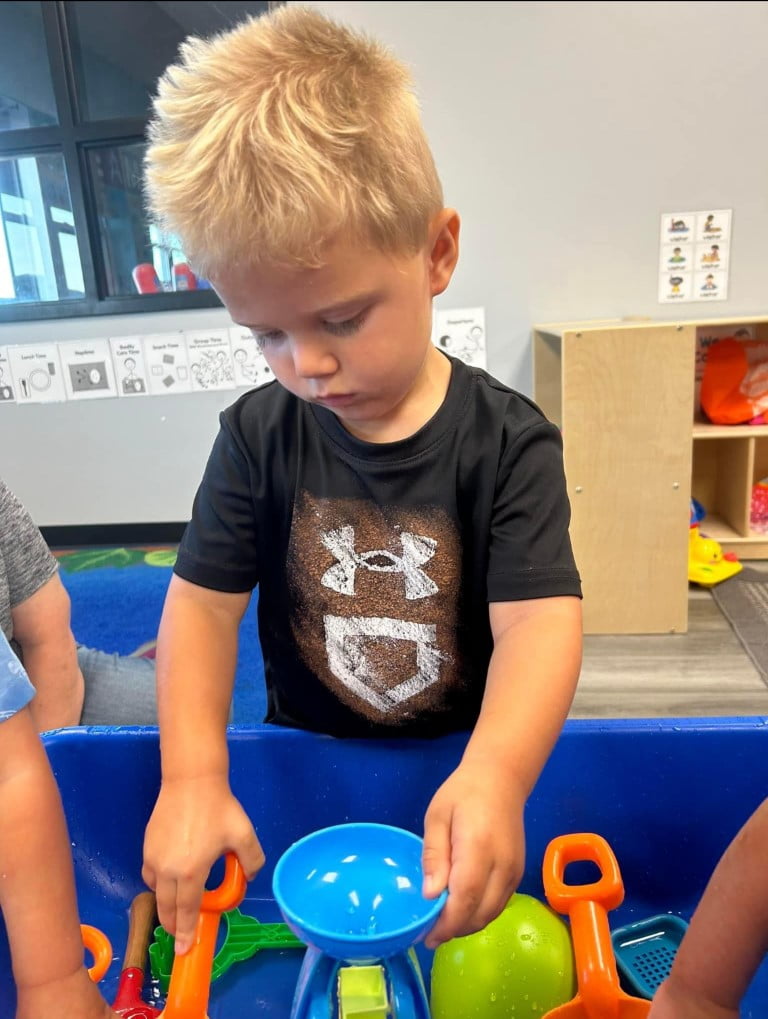
Our Pre-K STEM program introduces young children to science, technology, engineering and math through fun, hands-on learning experiences. It focuses on sparking curiosity, encouraging problem-solving and promoting early cognitive development, with structured STEAM activities that prepare children for kindergarten.
What the program includes
- Play-based learning: building blocks, water play and sensory exploration for early scientific thinking
- Inquiry and exploration: teachers prompt further questions in an open-ended environment
- Basic STEM concepts: natural phenomena, simple tools, building, shapes, counting and sorting
- Social and emotional growth: teamwork, patience and perseverance through trial and error
- Real-world connections like observing weather and planting gardens
- Integrated learning with storybooks, songs and creative projects
What a day looks like
- Question of the day and a hands-on investigation
- Experiments like melting ice with droppers
- Building and engineering challenges in small teams
- Literacy, songs and storybooks tied to the week’s theme
- Garden care and weather observation outside
Skills we build
Compare programs by age
Every classroom shares the same STEM/STEAM foundation. Here’s how it grows with your child.
| Program | Ages | STEM focus | Signature feature | Book |
|---|---|---|---|---|
| Infant | Birth to 12 months | Sensory play introduces cause and effect | Daily and weekly parent reports | Tour |
| Toddler | 12 to 24 months | Simple experiments foster curiosity | Daily and weekly parent reports | Tour |
| Twos | 24 to 30 months | Hands-on discovery across STEM zones | Teacher-guided group play | Tour |
| Young Preschool | 30 to 36 months | Art and science projects build problem-solving | Labeled, child-height materials for independence | Tour |
| Preschool | 3 years old | Interactive technology and group projects | Parent/teacher conferences | Tour |
| Pre-K | 4 years old | Structured STEAM activities for school readiness | Real-world STEM and kindergarten prep | Tour |
Program FAQ
Touring several centers? Ask for our free guide, “15 Questions to Ask on Any Daycare Tour,” when you visit. It’s yours to keep, wherever you choose.
Midland families raising Midland kids. Classroom spots are limited — tours fill weekly.
We place children by age and development: Infant (birth to 12 months), Toddler (12 to 24 months), Twos (24 to 30 months), Young Preschool (30 to 36 months), Preschool (3 years) and Pre-K (4 years). On your tour we’ll talk through where your child fits best.
Yes, at the right level. For infants, STEM looks like sensory play and cause-and-effect discovery. It grows into simple experiments for toddlers and structured STEAM projects in Pre-K.
Infant and toddler families receive daily and weekly parental reports. Preschool families also have parent/teacher conferences with individual progress reports.
Yes. Early Explorers is state licensed for 120 children, with a clean state licensing record: 0 violations in 6 inspections.
Classroom spots are limited and tours fill weekly. The best next step is to book a tour or call (989) 259-7579 to ask about your child’s age group.